
Luxembourg for Finance has long taken a leadership role in the work of promoting green finance. Its professionals did not need the summer of 2026 to remind them of the task at hand.
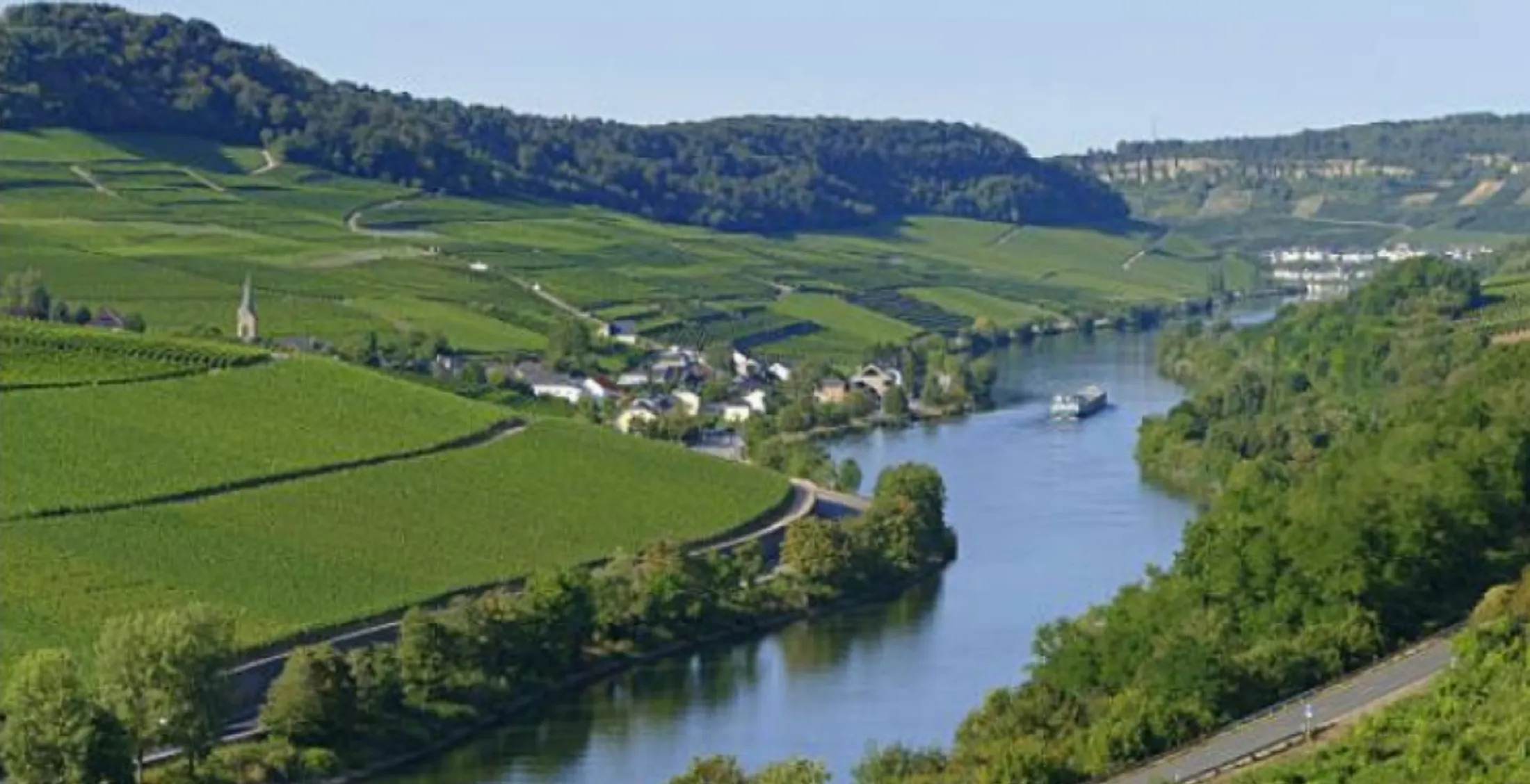
Lovely green hillsides, inviting fields and woods, and a gentle riverside – these are the usual images one has of the Grand Duchy of Luxembourg on a fine day in summer. The hot, dry summer of 2026 has, however, been a brutal reminder of real climate change happening. Unbelievably, fires in northern France just to the south, and in Belgium and Germany to the north, have underscored the acceleration of
change.
Luxembourg for Finance has long taken a leadership role in the work of promoting green finance. Its professionals did not need the summer of 2026 to remind them of the task at hand. This opinion highlights the scope and expertise at hand for Luxembourg’s financiers, and the global role they play.
Setting the scene
The output of Luxembourg’s financial services sector far exceeds what one might expect from the small physical landscape; in fact, the industry’s workforce draws many thousands of commuters in from neighboring Germany, France, and Belgium. The Grand Duchy is a busy place at the intersection of four European countries; that multi-cultural opening outward from Luxembourg has long encouraged these professionals to think widely and broadly beyond borders. The headquarters of the European Court of Justice and the European Investment Bank add breadth to the mix of people from many horizons, and that thinking informs daily conversation. The global cargo services fill out the picture of a country punching above its size, as those businesses contribute to knitting together the world with physical goods.
The landscape is indeed composed of fertile rolling hills and river valleys. It has benefited from an oceanic climate, at least until recently, marked by high levels of precipitation, particularly in late summer. The summers are warm, the winters are relatively cool. In the most recent Environmental Performance [1], Luxembourg ranked second out of 180 countries, and it is regularly ranked by Mercer as among the top twenty most livable places to be.
The government’s goal is to attain zero net greenhouse gas emissions by 2050; and on its path forward, the government was leading a multi-year, fivefold increase in organic farming. The government has been monitoring the health and integrity of its forests, too.
Luxembourg’s Green Financial Services
This story is not about the nation’s green finance schemes per se. Given the Grand Duchy’s centrality to administering European Union public funds, Luxembourg is widely recognized as the EU leader in this domain, and one of the handful of largest hubs in the world for green and sustainable finance. This leadership has been underpinned by the EU’s decades-long work in ESG, in practice in decision-making as well as in information disclosures.
Today, the scale of financial operations spans trillions of euros across investment funds, international debt listings, and the support data infrastructure [2]. The expertise required to operate on this scale has been built over decades, supported at every step by the related IT teams, and specialized lawyers and accountants. The Bourse de Luxembourg listed its first Eurodollar bond in 1963, demonstrating the pioneering spirit that marked the financial center; but the real impetus for tying the economic destiny of the country to financial services came in the 1970s as the continental European steel industry suffered a crisis. Heavy industry had been a pillar of the Luxembourg economy.
Before getting into numbers and sets of expertise, a word on the Luxembourg Sustainable Finance Initiative.3 Little about this financial center was accidental; the present success in climate change work is the result of planning and cross-market coordination. This Initiative was established as a publicly funded, public-private entity in 2020. The goal was to coordinate sustainable finance efforts under the guidance of the Ministry of Finance, Ministry of the Environment, Climate and Biodiversity, Luxembourg for Finance and the High Council for Sustainable Development. Six years on, the expertise has deepened; as a knowledge hub, it offers master classes for parties well beyond the four-country area.
Total Assets Under Management
In 2026, Luxembourg's combined public and private sustainable investment fund assets stand at roughly €1.7 trillion [4]. This is a massive portion of the European market share.
- Public market funds: sustainable public funds (UCITS) that follow explicit ESG strategies, domiciled in the Grand Duchy, hold €815.4 billion in assets, representing 31% of the entire European market. Approximately 71.5% of Luxembourg's public fund assets fall under the EU’s Sustainable Finance Disclosure Regulation’s Article 8 or 9 classifications. This Regulation came into force in March 2021 to stop “greenwashing,” which is to say actors pretending to be greener than they are. This regulation forces companies to share clear information about how they handle ESG strategies and risks.
- Private market funds: the amount of sustainable private funds, including private equity, real estate, and infrastructure, domiciled in Luxembourg, reached €855.6 billion, accounting for 77% of Europe's total sustainable private market assets.
Capital Markets and Bond Issuance
The Luxembourg Stock Exchange operates a platform separate from its main market of blue-chip listings, the Luxembourg Green Exchange (LGX). It was launched in 2016 as the world’s first organized marketplace dedicated entirely to sustainable securities [5].
- Issuance volume: LGX displays more than 2,400 green, social, and sustainability bonds.
- Global footprint: since inception, the issuance volume of these displayed securities has reached a total value of more than €1.3 trillion. Since that date, this platform has handled about half of all such green bonds globally and hosted 41% of all newly issued international sustainable bonds.
- 2025 activity: in just one year, the Luxembourg Stock Exchange and its specialized platform have together attracted the issuance and price display of 601 new sustainable bonds, raising €233 billion.
Core Pillars & Innovations
With due care, in order to broaden investment possibilities, Luxembourg has moved beyond “basic” green bonds into sophisticated transition and mixed-finance tools:
- Transition finance: the exchange launched the Transition Finance Gateway, providing climate transition data for over 500 corporate debt issuers so that they could help improve the transparency and combat greenwashing.
- LGX DataHub: this centralized database hosts structured, post-issuance data points on more than 25,000 sustainable bonds from over 4,200 global issuers, with the goal of such transparency providing enough hard information to facilitate some secondary market pricing. The possibility of data-based secondary market activity lowers the cost of capital at issuance.
- Islamic Green Finance: Luxembourg has successfully bridged the requirements of sustainable finance with Shariah-compliant frameworks, becoming a leading hub for green and sustainable sukuks.
- Microfinance: the Grand Duchy manages more than 60% of all global assets held within energy transition microfinance funds.
Conclusion
In view of the scale and concentration of sustainable asset management in these many forms, Luxembourg consistently ranks high in the European Union and globally for the depth and quality of its green finance ecosystem on the Global Green Finance Index (GGFI) [6]. As a final thought, much more than any such ranking or measurement, the information on green finance across the world reflected in the transactions taking place in Luxembourg mean that readers everywhere have more ways to measure the costs of financing the energy transition in its many forms and with so many actors. When those data are put to work, that can lead to more efficient pricing for all.
[1] https://epi.yale.edu/
[2] https://funds-europe.com/luxembourg-tops-europe-in-sustainable-fund-assets-report-shows/
[3] https://lsfi.lu/about-us-new/
[4] https://lsfi.lu/sustainable-finance-in-europe-and-luxembourg-2025-study/
[5] https://luxembourg.public.lu/en/invest/key-sectors/green-finance.html
[6] https://www.zyen.com/news/press-releases/press-release-global-green-finance-index/
The articles published here reflect the views of the respective authors and not necessarily those of the WAIFC.